As we age, our bodies undergo countless physiological transformations. We dedicate significant time to cardiovascular health, cognitive exercises, and joint mobility, yet we often overlook the very foundation of our daily movement: our feet.
By the time a person reaches their golden years, their feet have logged thousands of miles, absorbing tons of cumulative pressure. Over time, the structural integrity of the foot naturally declines. Without proactive, preventative self-care, common foot structural changes can translate into severe consequences—including chronic pain, reduced mobility, and an increased risk of falls.
Fortunately, most age-related foot complications are highly preventable. This comprehensive guide details the physiological changes that occur in aging feet, establishes the core pillars of daily foot self-care, and explains how proper biomechanical support can preserve your independence and mobility for years to come.
1. The Anatomy of Aging: What Happens to Our Feet?
To build an effective preventative care routine, we must first understand what occurs beneath the skin as the decades pass. The human foot is a complex mechanical structure containing 26 bones, 33 joints, and over 100 muscles, tendons, and ligaments. Over time, several predictable changes take place:
Fat Pad Atrophy
On the sole of the foot, directly beneath the heel and the ball of the foot, lies a natural layer of adipose tissue known as the fat pad. This fat pad acts as the body’s built-in shock absorber. As we age, this tissue naturally thins out and shifts forward (atrophy). With less natural cushioning, the bones of the foot bear direct, unmitigated impact against hard surfaces, making seniors far more susceptible to metatarsalgia and heel pain.
Ligament Laxity and Arch Collapse
Ligaments are the fibrous connective tissues that hold bones together and maintain the foot’s structural arches. With age, ligaments naturally lose their elasticity and begin to stretch. As they loosen, the medial longitudinal arch—the main arch running along the inside of the foot—gradually collapses. This flat-foot tendency (adult-acquired flatfoot) alters the biomechanics of the entire lower body, forcing the ankles to roll inward (overpronation) and placing abnormal strain on the shins, knees, hips, and lower back.
Reduced Proprioception
Proprioception is the nervous system’s ability to sense the body’s position, balance, and movement in space. The soles of our feet are densely packed with sensory receptors that send constant balance updates to the brain. In seniors, nerve sensitivity naturally decreases. When proprioception is compromised, the brain receives delayed or muffled signals from the ground, significantly increasing the likelihood of trips, slips, and balance loss.
2. The Pillars of Daily Foot Self-Care
Preventative care is not about treating pain after it arises; it is about establishing daily habits that protect foot health and maintain structural stability. A well-rounded self-care routine rests on three essential pillars:
Pillar 1: Intensive Skin and Nail Care
Dry skin is more than a cosmetic annoyance; in older adults, it poses a genuine health risk. Aging skin produces less oil, leading to severe dryness, scaling, and cracking—particularly around the heels (heel fissures). These cracks can breach the skin’s protective barrier, providing an entry point for bacterial infections.
- Daily Hydration: Wash your feet daily with warm (not hot) water and a mild soap. Pat them completely dry, paying close attention to the spaces between the toes to prevent moisture buildup (which can lead to fungal infections). Apply a thick, urea-based moisturizing cream to the heels and soles immediately after drying, avoiding the interdigital spaces.
- Safe Nail Trimming: Cut toenails straight across and file the edges gently with an emery board. Avoid rounding the corners of the nails, as this is the primary cause of painful ingrown toenails. If flexibility or eyesight makes nail trimming difficult, seek the assistance of a podiatrist.
Pillar 2: Targeted Mobility and Strength Exercises
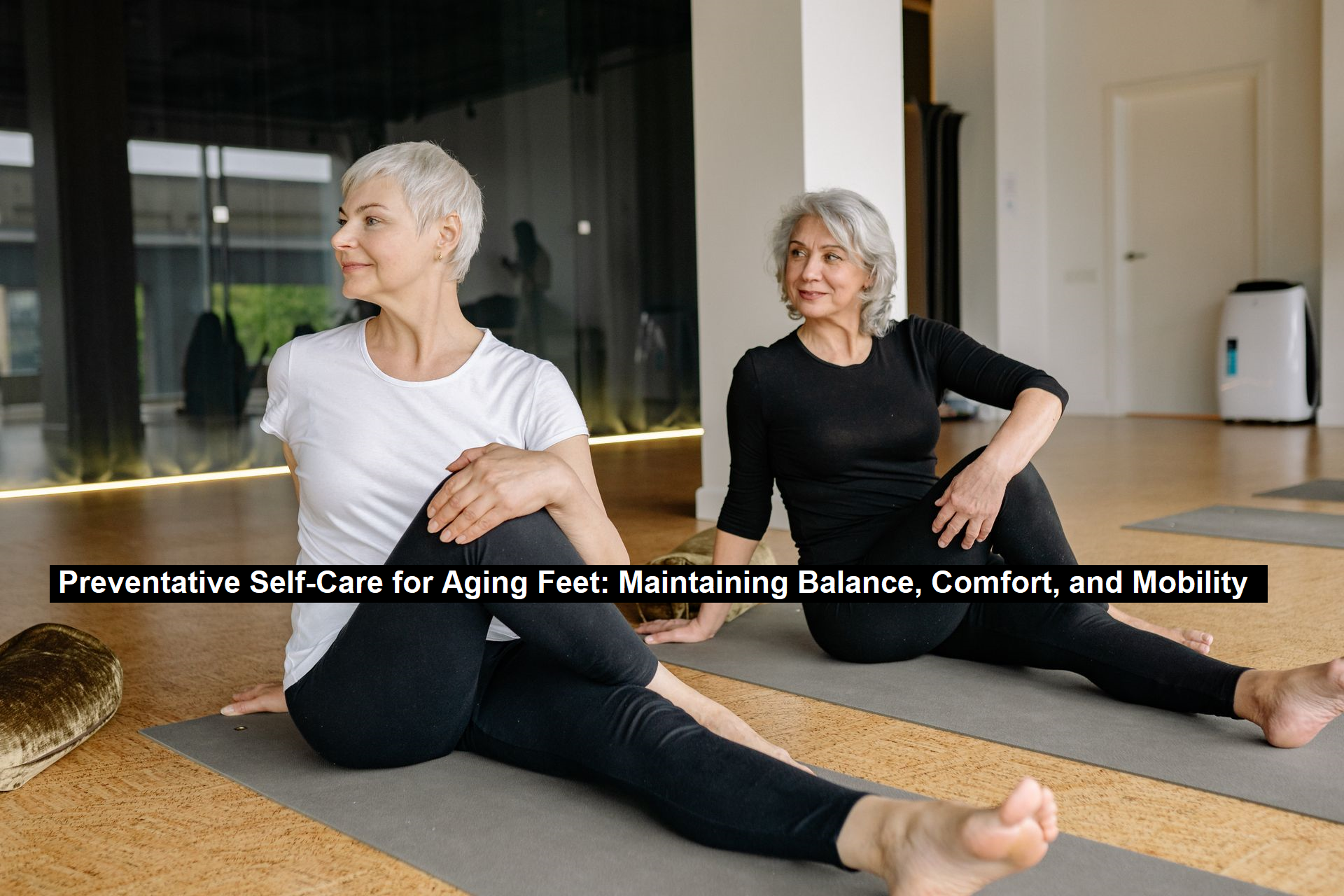
Like any other part of the body, the small muscles inside the foot (intrinsic muscles) require regular exercise to prevent muscle wasting and stiffness. Keeping these muscles active helps maintain arch structure and improves balance.
- Towel Scrunches: Place a small towel on the floor, sit in a chair, and use your toes to scrunch the towel toward you. Repeat this 10 to 15 times per foot to strengthen the toe flexors and support the transverse arch.
- Calf and Plantar Stretch: Sit on the floor with your legs straight out. Loop a towel around the ball of one foot and gently pull it toward you, holding for 20 to 30 seconds. This stretch maintains flexibility in the Achilles tendon and plantar fascia, preventing the morning stiffness associated with plantar fasciitis.
- Toe Spreads: Sit with your feet flat on the floor. Spread your toes as wide as possible without lifting them. Hold for 5 seconds, release, and repeat 10 times to improve lateral toe stability.
Pillar 3: Routine Inspection
For seniors, particularly those managing diabetes or peripheral neuropathy, daily visual inspections are non-negotiable. If you cannot feel minor irritations due to nerve damage, a small blister or red spot from an ill-fitting shoe can quickly deteriorate into a serious ulcer. Use a floor-standing or hand-held mirror to check the bottom of your feet daily for cuts, blisters, redness, swelling, or changes in nail color.
Read: Self-Care on the Go: How to Stay Consistent Even With a Busy Lifestyle
3. The Role of Biomechanical Support: Restoring Balance and Alignment
While hygiene and exercise form the foundation of preventative care, they cannot fully offset the mechanical forces exerted on collapsed arches or atrophied fat pads. This is where structural biomechanical support becomes critical.
Many seniors assume that soft, highly cushioned footwear is the best solution for sore feet. However, placing a structurally compromised, unstable foot onto a soft, mushy foam footbed is akin to building a house on a foundation of sand. Soft foam collapses under body weight, offering zero control over ankle pronation. In fact, excessively soft cushioning can actually worsen balance by muffling the sensory feedback needed for proprioception.
To effectively manage heel strike impact and prevent arch collapse, seniors need firm, structured support. Orthotics with a semi-rigid nylon or composite core provide several key benefits:
- Pressure Redistribution: By matching the natural contours of the foot, structured insoles distribute body weight evenly across the entire plantar surface, taking the localized pressure off the heel and metatarsals.
- Ankle Stabilization: A deep heel cup holds the calcaneus (heel bone) in a neutral vertical position, preventing the ankles from rolling inward and restoring proper alignment to the knees and hips.
- Reduced Plantar Strain: Supporting the arch prevents the plantar fascia—the thick band of tissue running along the bottom of the foot—from overstretching and micro-tearing during weight-bearing activities.
For seniors seeking targeted, practical tips on combating heel and arch strain, a comprehensive foot pain relief guide can offer biomechanically sound advice on selecting the right orthotics and stabilizing footwear.
4. Footwear Selection Criteria for Older Adults
Proper orthotics must be paired with appropriate footwear. When selecting daily walking or recovery shoes, seniors should look for these crucial features:
- A Wide, Oblique Toe Box: The front of the shoe must be wide enough to allow the toes to splay naturally. Narrow, pointed shoes compress the toes, exacerbating bunions, hammertoes, and neuroma pain.
- A Firm Heel Counter: The heel counter is the stiff cup at the back of the shoe. Squeeze the heel of the shoe; it should resist collapsing inward. A firm heel counter provides lateral support, keeping the heel stable.
- Secure Closure Systems: Avoid slip-on shoes or backless slippers, which force the toes to “grip” the shoe to keep it on, altering your walking pattern. Choose shoes with secure laces, adjustable straps, or sturdy Velcro closures.
- Torsional Rigidity: Try to twist the shoe like a rag. A supportive shoe should resist twisting in the midfoot, bending only at the forefoot where the toes naturally flex.
Conclusion
Aging feet do not have to mean a loss of independence or a life limited by chronic discomfort. By incorporating basic hygiene, targeted exercises, and proper structural biomechanical support into your daily routine, you can protect your feet from premature wear and tear.
Investing in preventative foot care is ultimately an investment in your entire body’s alignment and stability. Take care of your foundation today, and your feet will continue to carry you safely and comfortably through your active senior years.