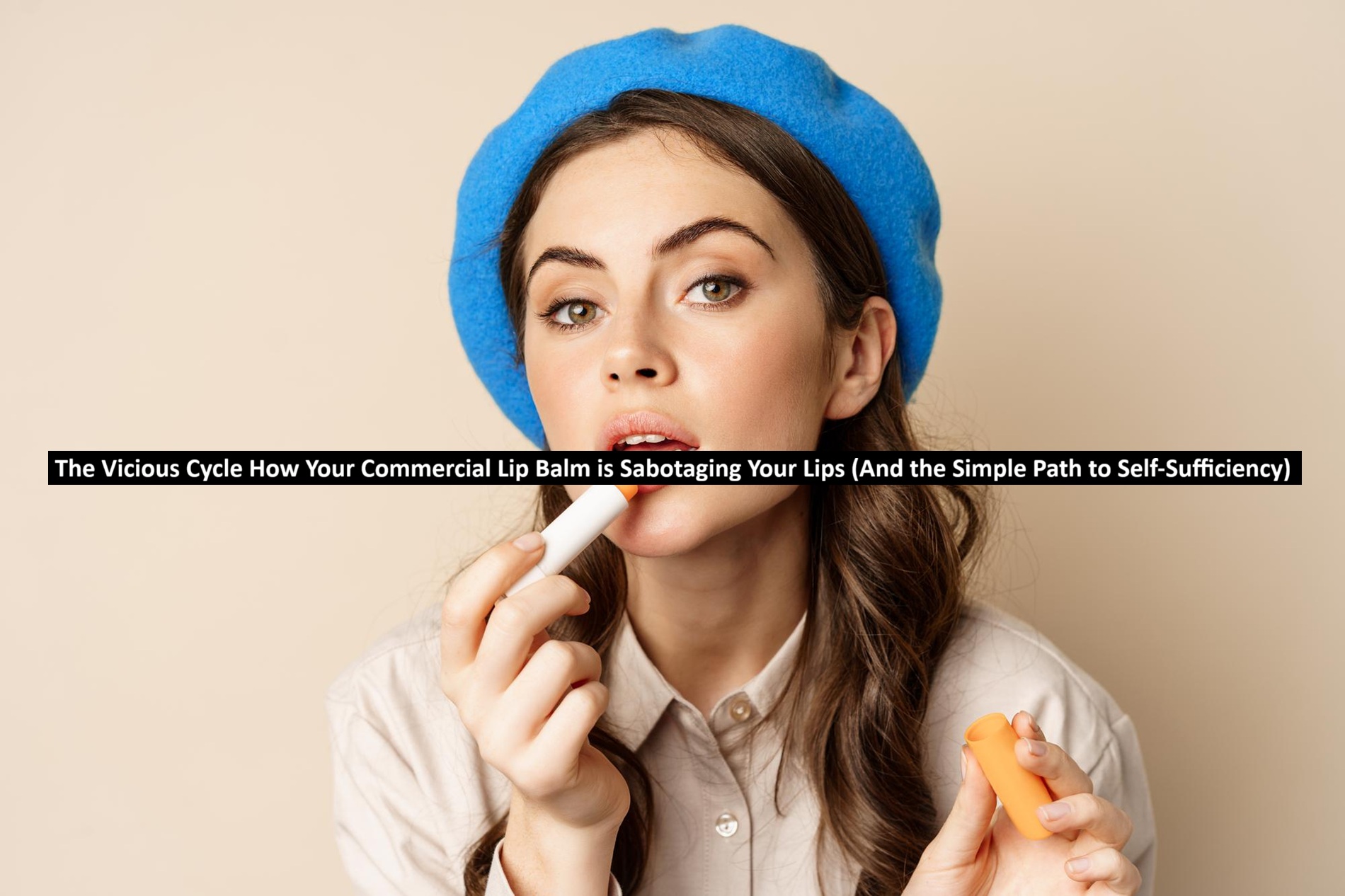
Do you feel a familiar, creeping tightness whenever your lips are bare? Is the feeling of a forgotten lip balm almost an unbearable, frantic sensation? If you find yourself reaching for that tube dozens of times a day-on your desk, in your car, right before bed-you are caught in the global phenomenon known as the “lip balm trap.”
While often dismissed as a harmless habit or a sign of naturally dry skin, this cycle of dependency is, for many, an unintentional consequence of the very products we trust to heal our chapped lips. The unfortunate truth is that many commercial lip balms are formulated not to cure dryness, but to provide a superficial, temporary feeling of relief that keeps you coming back for more.
It’s time to stop treating the symptom and understand the strategic product failure that has led your lips to be so reliant on a little waxy tube. Breaking the cycle is not about quitting lip balm altogether; it’s about swapping out deceptive ingredients for true nourishment and empowering your lips to finally heal themselves.
The Anatomy of Dependence: Why Your Lips Are Addicted
To understand the problem, we must first look at the unique nature of the lips. Unlike the rest of your skin, the lips lack sebaceous glands-the tiny structures that produce sebum, the skin’s natural oil. This makes them highly susceptible to moisture loss and environmental stressors.
A truly effective lip product must achieve two things:
- Hydration (Moisture Source): Bring water into the skin cells.
- Occlusion (Moisture Lock): Create a barrier to prevent that water from evaporating.
Many major brands only focus on the second point-occlusion-but do it with such heavy, non-breathable barriers that they essentially suffocate the lips.
The Problem of Passive Hydration
The heavy occlusives in mass-market balms (like petrolatum and mineral oil) form an impenetrable, plastic-like shield. While this seal immediately stops existing moisture from escaping, it also blocks water from entering and, crucially, tells your lips that their job is done.
Your lips stop trying to regulate their own moisture balance. The moment that thin layer wears off, the skin underneath is still dehydrated and completely passive. It signals instant distress, creating the intense, immediate urge to reapply. This isn’t a true addiction; it’s a form of chemical dependence on a cosmetic device, orchestrated by ingredients that create a flawless, yet ultimately detrimental, seal.
Read: How to fade acne scars naturally
The Three Saboteurs: Ingredients Working Against You
When seeking lip relief, it is essential to check the ingredient list for these three major culprits:
1. The Petroleum and Wax Barrier
- The Culprit: Petrolatum (Petroleum Jelly), Mineral Oil, Paraffin, Silicones (e.g., Dimethicone).
- The Trap: These ingredients are superb at forming a barrier, but they are emollients (smoothening) and occlusives (sealing)-they contain zero moisturizing properties themselves. They simply trap what is already there. If you apply them to an already dry lip, you are sealing in the dryness, not treating it. Over time, this passive moisture management creates the severe reliance you feel.
2. The Faux-Healing Irritants
- The Culprit: Menthol, Camphor, Phenol, Salicylic Acid (sometimes used as an exfoliant).
- The Trap: Many people equate a cooling or tingling sensation with a product “working.” These ingredients create that tingle, but they are actually mild chemical irritants. They generate a momentary rush of blood to the surface of the lips (which feels warm and soothing) while simultaneously disrupting the delicate lip barrier. This irritation leads to inflammation, increased sensitivity, and faster evaporation of moisture, thereby worsening the chronic dryness and demanding more frequent application.
3. The Synthetic Flavor and Fragrance Agents
- The Culprit: Artificial flavors (e.g., citrus, cinnamon) and strong synthetic fragrances.
- The Trap: The skin on your lips is one of the most reactive areas of your body. Synthetic flavors and fragrances are common contact irritants that can lead to low-grade allergic reactions, known as contact cheilitis. This often presents as subtle peeling, persistent chapping, or redness that never quite clears up. Since you’re using the scented balm multiple times a day, you are repeatedly exposing your lips to the very irritant causing the chronic problem.
Beyond the Balm: Lifestyle Habits That Worsen the Damage
Even the best lip balm can’t fix poor lifestyle habits that exacerbate dryness.
1. The Saliva Evaporation Myth: Licking your lips provides instant relief, but saliva contains digestive enzymes (amylase and maltase) that break down the delicate skin barrier. Furthermore, as the moisture from the saliva evaporates, it takes existing moisture from your lips with it, leaving them drier than before-a cycle often called “chapped lips.”
2. The Power of Internal Dehydration: The lips are often the first place on your body to show signs of internal water deficiency. If you are consistently dehydrated, no amount of external balm can fix the issue. Lip care starts with drinking enough water throughout the day.
3. Ignoring the UV Rays: The lips are highly vulnerable to sun damage, which not only causes fine lines and pigmentation but also severely degrades the skin barrier’s ability to retain moisture. Skipping SPF on your lips accelerates chronic dryness and chapping.
The Path to Lip Freedom: Ingredients That Heal
To gain lip independence, you must switch your focus from sealing to repairing. Look for balms that contain a balanced blend of ingredients that actively nourish the skin barrier.
- Emollients for Deep Repair: Choose balms rich in natural plant butters and oils that contain fatty acids, which mirror the skin’s natural lipids. Look for Shea Butter, Cocoa Butter, Mango Butter, Jojoba Oil, or Coconut Oil. These actively repair and smooth the cracks in the lip barrier.
- Humectants for Genuine Hydration: These ingredients actively pull water into the lip tissue from the surrounding air. Look for Hyaluronic Acid, Glycerin, or Honey. These are crucial for true moisture retention.
- True Occlusives (Natural Wax): You still need a seal, but it should be breathable. Look for Beeswax or Candelilla Wax in the formulation. These provide a protective shield without completely suffocating the skin.
Your 4-Step Recalibration Plan
Breaking the dependency cycle can take anywhere from a few days to a few weeks, but consistency is key.
1. The Product Purge: Immediately remove any balms containing the chemical saboteurs (petrolatum, mineral oil, menthol, camphor, synthetic fragrance). Replace them with a single, high-quality balm rich in natural butters and oils.
2. Implement the Morning SPF Shield: Every single morning, apply a lip product containing an SPF of 30 or higher (ideally mineral-based). This protects your lips from the most common environmental cause of chronic damage.
3. Practice Mindful Reapplication: Instead of reapplying the moment you feel discomfort, consciously wait a bit longer. Use a clean cloth to gently dab your lips, and consciously take a sip of water. Reapply your new, nourishing balm only when your lips truly feel dry, not out of habit. The goal is to gradually stretch the time between applications.
4. The Overnight Healing Mask: Since your lips repair themselves while you sleep, make a generous evening application non-negotiable. Before bed, apply a thick layer of pure butter (like Shea or Cocoa) or a specialized overnight lip mask. This deep, extended dose of nourishment will accelerate the healing process, allowing you to wake up with softer lips and less need for balm throughout the day.
By focusing on genuine hydration and repair, you can teach your lips to be self-sufficient once again. The power to break the cycle is not in the tube, but in your choice of ingredients and your commitment to a healthier routine. Welcome to lip freedom.