
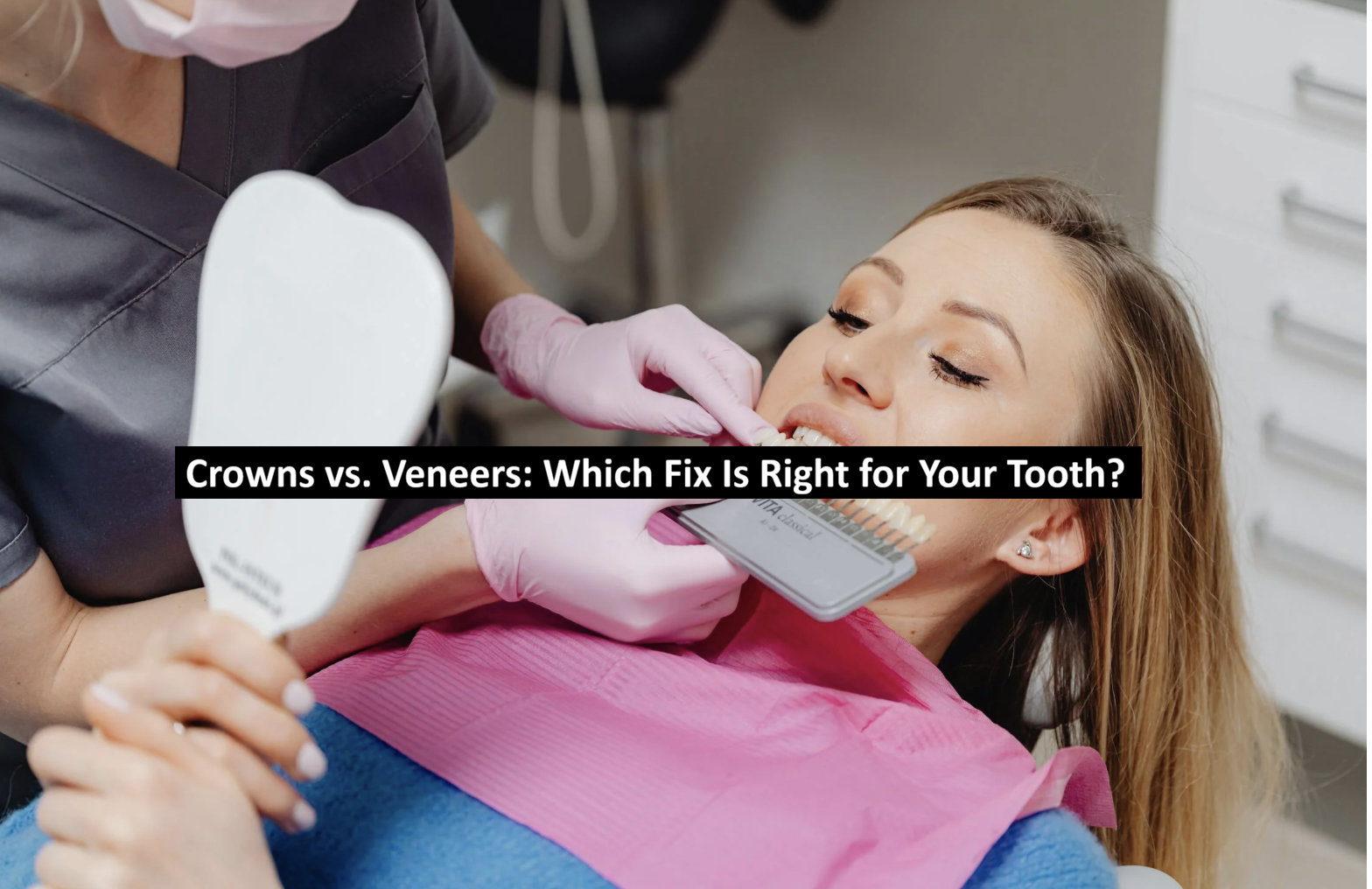
Plenty of people wind up in the dentist’s chair after one unlucky bite on something hard, like a popcorn kernel, a nut, even a seed, or after catching a glimpse of their smile and realizing it looks more worn than they remember.
The good news is that dentistry has great solutions. Two of the most popular are crowns and veneers. At first glance, they may seem similar. Both can transform how teeth look, but they’re really made for different purposes.
What is a Crown?
Think of a crown as armor for a tooth. The tooth underneath might be delicate or cracked, but once the crown slips over it, the whole structure feels solid again. It doesn’t just cover part of the teeth, but everything you can see above the gum line.
Crowns are available in a variety of materials, including porcelain, ceramic, resin, and even metal. The result is a tooth that looks normal again, and its strength has also been restored. You can chew steak, apples, or crusty bread without worrying that it might break.
Read: Why Saying “No” Is the Real Self-Care: Boundaries That Actually Work
Veneers: Front Row Upgrade
Veneers work differently from crowns. They don’t cap the whole tooth, just the front surface, the part you flash when you smile. They’re thin shells, almost like contact lenses for teeth. Your dentist removes a tiny layer of enamel, usually less than one millimeter, and bonds the veneer in place.
Veneers are more about style than strength. They’re the secret behind fixing those front-row imperfections. Wonder how some stars go from regular teeth to flawless smiles practically overnight? Veneers are often behind the magic.
When Crowns Make Sense
Generally, dentists recommend crowns when a tooth is compromised. This could include any of the following scenarios:
- A tooth that’s cracked or badly worn down.
- A tooth that’s had a root canal and needs protection.
- A giant filling that’s left the tooth shell fragile.
Imagine covering a hole in your wall with a poster. It may appear fine from a distance, but the wall remains weak underneath. Teeth work the same way. A veneer can’t rescue a tooth that’s already damaged. In that case, dental crowns can shore it up while also improving its appearance.
When Veneers Shine
Veneers are the choice when your teeth are safe and strong, but you just don’t love how they look. Sometimes the problem isn’t damage at all. Maybe the edge of your front teeth looks jagged, or there are little spaces between them that bother you. Braces aren’t always necessary for minor issues; veneers can cover them up. They also leave most of your natural tooth in place, which is part of their appeal if the tooth itself is strong and healthy.
They’re often thought of as a smile makeover. You can opt for just one or two to blend in, or go with a complete set across the front teeth. That’s one of those cosmetic procedures that delivers a dramatic, movie star-style transformation.
Side-by-side Comparison
Let’s break down the differences in simple terms:
- Coverage: Crowns = full tooth cap. Veneers = just the front.
- Tooth prep: Crowns require more reshaping. Veneers are less invasive.
- Strength: Crowns win, hands down. Veneers are cosmetic.
- Look: Both can look natural and attractive when done well.
- Longevity: 10-15 years is typical for both with good care.
- Cost: Crowns generally cost more than veneers.
Everyday Care
Neither is hard to live with, but both require attention. You’ll need to brush twice daily, floss, and maintain regular cleanings. This, of course, is good advice for everyone, whether you have crowns, veneers, or neither.
Many of us have habits that wreck teeth. Biting your nails, chewing on ice cubes, even trying to pop open packaging with your front teeth. Natural teeth can chip from such thoughtless actions, and so can restorations. If you’re invested in crowns or veneers, it’s even more critical to kick those habits.
For most people, replacements are needed after ten to fifteen years, though with some luck (and good habits) they can last longer.
Which is “Better?”
The right choice all depends on what you need. If you’re trying to protect a frail tooth, a crown might be just what you need. If the tooth is strong and you just want brighter, more evenly shaped teeth, veneers might be enough.
Sometimes the answer is both. It’s not unusual for someone to get crowns on their back teeth for improved chewing strength, then veneers up front where the focus is on cosmetic appearance.
Why a Dentist’s Advice Matters
Here’s where things get tricky. Two smiles that appear identical in a selfie may require completely different treatment plans. That’s why a real exam is priceless. Dentists aren’t just glancing at color or shape. They’re checking bite pressure, enamel quality, gums, and even whether you grind your teeth at night. They can show you digital previews, allowing you to “test drive” a new smile before committing.
Crowns or Veneers? Which is Right For You?

Improving a smile has ramifications for so many aspects of your life. Think confidence at work presentations, enjoying photos again, or laughing freely without covering your mouth. People often report that those small benefits are what matter most.
Setting up a consultation with a dentist is the easiest way to know which one actually fits your situation. From there, you can plan out not just healthy teeth, but a smile you’re genuinely proud of. You don’t need to figure out dental crowns versus veneers all by yourself; that’s precisely what a consultation is for. A dentist can walk you through the pros and cons and help map out a plan that fits your smile.